Showing posts with label quinoa. Show all posts

Sunday, September 5, 2010

Quinoa with Almonds and Cranberries


I love this recipe! Quinoa can be bland, but mix it with almonds and cranberries, and it is fabulous. The recipe is relatively quick and easy.


The ingredients are:
1 cup quinoa
1/2 cup slivered almonds
1 teaspoon of vegetable oil (I used almond oil)
1 1/2 cups boiling water
1 vegetable cube (or chicken boullion)
1/2 teaspoon salt
1 cinnamon stick
1 bay leaf
1/2 cup dried cranberries


Most quinoa sold in the United States have been pre-washed, but it is advisable to wash it again anyway. Soak the quinoa for 15 minutes. Afterwards, stir and drain the quinoa. 

Heat a wide-bottomed pan on medium heat and add the oil. Add the almonds and stir them until they are golden. Remove and set them aside. 


Next add the quinoa to the pan and stir until dry and turning color. Add the boiling water, cube or boullion, salt, bay leaf, cinnamon stick, and dried cranberries. Bring it to a boil then cover, lower heat and simmer for about 10 minutes, or until all water is absorbed. Let it sit for about 5 minutes. You can serve it immediately or save for later.

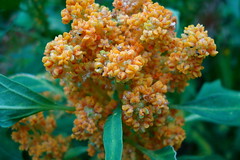
Ancient Grains: Quinoa

photo courtesy of net_efekt
Quinoa, like amaranth is not technically a grain because it is not a grass. Quinoa seeds however are ground and uses as grains. Amaranth is grown in warm areas or seasons, whereas quinoa is grown in cold areas or seasons. 

The origin of quinoa is probably the Altiplano region of Peru or Bolivia about 3000 years BCE. The ancient Incas called it la chisiya mama which means the mother grain. The first sowing of the season was a ceremony in which the Inca Emperor planted the first seeds with a gold shovel. The Incas mixed quinoa with animal fat and made balls that they called "war balls." The men would take them on marches as nutritious food. This seems reminiscent of the use of pemmican by the Commanches.

The Spanish conquerors did not like quinoa, possibly because the seed coat contains saponins, which are bitter. Saponins are easily removed by rinsing the grains, but the bitterness mixed with quinoa's sacredness to the Incas caused the Spanish to discourage its production. Instead, they encouraged corn production and quinoa became much less common. 

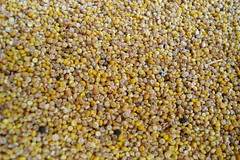
Quinoa color varies from off-white to red to black and it contains all nine essential amino acids. Also, quinoa is a good source of manganese, magnesium, iron, copper, and phosphorus, and a moderate source of zinc, potassium, B vitamins, and vitamin E. Quinoa is easy to digest and a good source of fiber. 

People often snack and overeat because when they eat certain foods their blood sugar level abruptly spikes and declines making them hungry again quickly. Quinoa has a low glycemic index therefore the uptake of sugars is regulated and slower, therefore the eater has a ‘full’ feeling longer. So quinoa can help you avoid between-meal-snacks. Also, quinoa is healthy for our hearts and has only about 159 calories per serving.