Showing posts with label history. Show all posts

Friday, October 29, 2010

The Peach of Immortality

蟠桃

Peach trees receive great importance in Chinese symbolism and mythology. Each part of the peach tree has a different meaning. Because the peach tree wood was thought to ward off evil, ancient Chinese warriors made weapons from it. The petals of peach blossoms were thought to put men into an intense trance of love. The fruit of the peach is considered the divine fruit of Gods, and is associated with long life and immortality. The peach tree in general symbolizes longevity.

According to a famous Chinese legend, the Peach Plant of Immortality lives in the Kun Lun Mountains and produces fruit every 3,000 years. When the magic fruit appears, the Eight Immortals eat it and their immortality is assured. The Eight Immortals were part of Chinese Oral History before the stories were written.

The Eight Immortals are:


Lü Dongbin 
(呂洞賓; pinyin: Lǚ Dòngbīn) The Chief leader (right)
Lü Dongbin was an 8th-century scholar, who learned the secrets of Taoism. He traveled the earth slaying dragons and fighting evil. 
He is associated with
  • a sword that can subdue the evil,
  • a fly brush in his hand, and 
  • patronage of barbers.


Li Tie Guai 
(李鐵拐; pinyin: Lĭ Tiĕ Guăi) The Iron-Crutch Li (second from right)
Because of his great skill at magic, Li Tie Guai, could free his soul from his body and aid others in the celestial realm. Once, while his spirit was gone from his body, a disciple decided that Li Tie Guai was dead so he burned Li's body as was traditional. When Li’s soul returned, it was forced to enter the body of a lame beggar.
He is associated with 
  • a double gourd that symbolizes longevity and the ability to ward off evil,
  • a cloud coming out of the gourd that represents the soul, 
  • helping the needy and relieving the distressed,
  • a mythical hoofed creature, and
  • patronage of the sick.

He Xian Gu 
(何仙姑; pinyin: Hé Xiān Gū) The Immortal Woman (3rd from right)
There are different legends of He Xian Gu, daughter of a 7th-century shopkeeper, however one version says that she ate a magic peach, became immortal and now flies around the earth and heavens. 
She is associated with a
  • lotus or lotus pond and meditation
  • peach, the divine fruit of Gods and immortality or
  • a musical instrument or ladle that she uses to dispense wisdom, meditation, and purity.
Zhongli Quan 
(鐘离權; Pinyin: Zhōnglí Quán) fourth from right
Zhongli Quan, a fat man with his bare belly visible,  had the power of transmutation and knowledge of the elixir of life. 
He is associated with 
  • a fan which can bring the dead back to life,
  • patronage of military men.

Zhang Guo Lao 
(張果老; pinyin: Zhāng Guǒ Lǎo) The Elder Zhang Guo (fifth from right)
Zhang Guo Lao, an old man, travelled with a white mule. The mule could go long distances then be folded up and placed in a wallet. Water reconstituted the mule for further use.
He is associated with
  • a bamboo drum that can cure life, and
  • patronage of old men.

Cao Gou Jiu
(曹國舅; pinyin: Cáo Guó Jiù) The Royal Uncle Cao (6th from right)
There are also different legends of Cao Gou Jiu. In one part of the royal family and the son of a military commander. In another, his brother killed a person and Royal Uncle Cao was so sad that he resigned his office and left home.
He is associated with 

  • castanets, which represent his free access to the palace, a benefit of his rank,
  • a jade tablet, which can purify the air, 
  • formal court dress,and 
  • patronage of actors.

Lan Cai 
(蓝采和; pinyin: Lán Cǎihé) The Immortal Hermaphrodite (seventh from right)
Lan Cai is said to have wandered the streets as a beggar while singing about the brevity of mortal life. 
He/she is associated with

  • a basket of flowers symbolizing longevity, 
  • reminding people of the transience of life,
  •  using the basket to communicate with gods,
  • a tattered blue gown and only one shoe,
  • patronage of florists.

Han Xiang Zi
(韓湘子; pinyin: Hán Xiāng Zi) The Philosopher Han Xiang (eighth from right)
Han Xiang Zi, the nephew a famous scholar, was able to make flowers bloom instantaneously and tame wild animals.
He is associated with

  • the flute, which can cause growth,
  • happiness,
  • patronage of musicians.


Health attributes of peaches
1 peach has (RDA is recommended daily allowance for adults)

  • 66 calories
  • 323 mg potassium (9% RDA)
  • 2.6 g dietary fiber (10% RDA)
  • Vitamin A (11% RDA)
  • Vitamin C (19% RDA)
  • Niacin (7% RDA)
  • Vitamin K (6% RDA)

Read more at: http://www.livestrong.com/thedailyplate/nutrition-calories/food/peaches/peach-1cup-sliced-170-g/#ixzz13cJgwWnI

Tuesday, October 26, 2010

Cassava: A Lesson in Human Ingenuity!

Sometimes it amazes me that certain plants have become food! Cassava, for example, has been domesticated for 8-10,000 years. But cassava contains cyanogenic glucosides which become hydrogen cyanide. The cyanide combines with hemoglobin making it unable to carry oxygen to tissues.

Cassava was most likely first domesticated by people near the southern border of Brazil, however early evidence of its use in Central America has also been found.

Portuguese explorers found people using cassava as a staple when they visited South America. As the explorers participated in the slave trade, they introduced the crop to Africa in about 1550. From the slave trading stations near the mouth of the Congo River, cassava soon spread to all of central Africa. The Portuguese also spread cassava to East Africa, Madagascar, India, Ceylon, Malaya, and Indonesia by the 1700s.

image from blog.terramadre.org/index.php/kubrick/2006/09/P10/
The people found using cassava in South America were the Tupinamba. They processed the tubers into meal and bread using techniques similar to those still used today. These techniques remove the dangers from cyanogenic glucosides.

But how did the people figure this out? Human ingenuity? We may never know, but we can use their preparation techniques to protect ourselves from the dangers.

Peeling the tuber is the first line of defense because most of the cyanogenic glucosides are found in the tuber skin. Pulping the tuber is another method of detoxifying the cassava. In pulping, the peeled tuber is grated and crushed, pressing most of the water and toxins out of the pulp. Boiling can also remove the toxicity.

Cassava varies in bitterness depending on growing conditions and the genetics of the individual plant. Higher contents of cyanogenic glucosides correspond to more bitter tasting cassavas.

Amounts of cyanogenic glucosides in cassava are:
–Sweet Cassava 40-130ppm
–Non-Bitter Cassava 30-180ppm
–Bitter Cassava 80-412ppm
–Very Bitter Cassava 280-490ppm
where ppm is parts per million and concentrations less than 50 ppm are considered safe.


Most cassava tubers sold in grocery stores in the United States is sweet cassava. Bitter cassava is often processed into flour, with the toxins removed during processing. However, in some tropical nations some people eat bitter cassava if they have no other food. These people can suffer neurological disorders and other problems if they do not prepare the cassava properly. Over 500 million people in the world depend on cassava as their main calorie source.


More information about cassava can be found at
http://researchnews.osu.edu/archive/cassava.htm and

Wednesday, September 22, 2010

The Autumnal Equinox and the Chinese Moon Festival

Today is the first day of autumn! Here in Austin it still feels like summer, and the trees are still green...however soon the weather will start to cool. Today is also the Autumn Festival in many Asian countries. This is the 15th day of the 8th month of the Chinese Calendar, and also the day when the moon is considered to be the brightest full moon of the year.


I was worried that I would not be able to see the moon tonight, because it was cloudy for much of the day...however the clouds left and I was able to see the full moon in all of its brilliant glory. I took some moon cakes to work today to celebrate the Chinese Autumn or Moon Festival with my co-workers. Here is a picture of some of the moon cakes we shared.


I found some internet resources that might help you understand the traditions of the Moon Festival. They are listed below.

This festival is fun for both children and adults. You should incorporate this family celebration into the rituals of your household if you want to have a fun experience and introduce your children to the full moon and Chinese culture!

Saturday, September 18, 2010

Ancient Grains: Teff


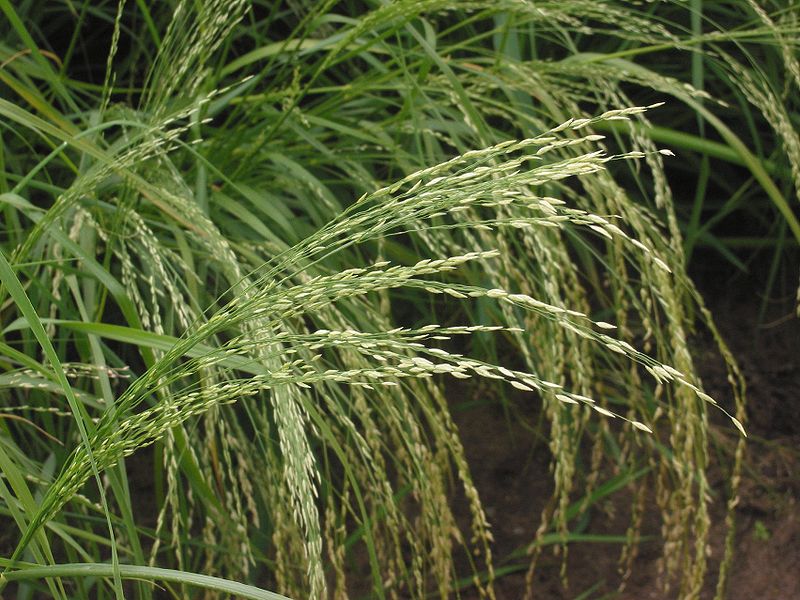
Ethiopians domesticated the grain Teff as early as 4000–1000 BCE. The name Teff means "lost" because this grain is easily lost if dropped because it is the smallest of the  grains.


Although many ancient grains have been nearly lost and rediscovered, teff has been used continuously in Ethiopa to make a bread called injera. This bread is a little thicker than a crepe and is quite spongy. Ethiopians prepare it into large flat sheets, then make "stew like" meals that they place on top of the injera. They then break off pieces of the bread and scoop up the stew with it to eat. I find this incredibly resourceful!


Teff is also known as lovegrass in English and belongs to the genus Eragrostus. Because the grains are so small the bran is difficult to remove, so it is used as a whole grain, making it quite healthy.


Teff is a crop that can survive the stresses of an unreliable climate, so it has the potential to provide nourishment in many marginal environmental areas.


Below are some interesting links that will help you learn more about teff.


http://www.versagrain.com/teff.html
http://www.hort.purdue.edu/newcrop/cropfactsheets/teff.html 
http://ethnomed.org/clinical/nutrition/more-about-ethiopian-food-teff
http://nutritiondata.self.com/facts/cereal-grains-and-pasta/10357/2


http://blip.tv/file/1501065 great video about making teff

Wednesday, September 8, 2010

Ancient Grains: Spelt


Eising/Getty Images

Triticum spelta, commonly known as spelt in the United States, Farro in Italy, and Dinkle in Germany is a type of wheat that was domesticated around 5-6000 BCE in what is now Iran. It spread westward throughout Europe and was  distributed to needy Roman citizens throughout the Roman Empire. Prior to 1920, it was the primary wheat source throughout the world. After 1920 it nearly disappeared from stores as wheat varieties too over because they have higher yields and easier processing. The health food movement brought it back to popularity in the 1970s.


Spelt contains about three times as much protein and fiber as white wheat flour. It also contains Mucopolysaccharides that act as a blood clotting factor and immune system stimulator. Spelt is also an excellent source of B complex vitamins. 

Because spelt has a sturdy husk on the kernel, it is resistant to some pollutants and insects. 

Sunday, September 5, 2010

Ancient Grains: Quinoa

photo courtesy of net_efekt
Quinoa, like amaranth is not technically a grain because it is not a grass. Quinoa seeds however are ground and uses as grains. Amaranth is grown in warm areas or seasons, whereas quinoa is grown in cold areas or seasons. 

The origin of quinoa is probably the Altiplano region of Peru or Bolivia about 3000 years BCE. The ancient Incas called it la chisiya mama which means the mother grain. The first sowing of the season was a ceremony in which the Inca Emperor planted the first seeds with a gold shovel. The Incas mixed quinoa with animal fat and made balls that they called "war balls." The men would take them on marches as nutritious food. This seems reminiscent of the use of pemmican by the Commanches.

The Spanish conquerors did not like quinoa, possibly because the seed coat contains saponins, which are bitter. Saponins are easily removed by rinsing the grains, but the bitterness mixed with quinoa's sacredness to the Incas caused the Spanish to discourage its production. Instead, they encouraged corn production and quinoa became much less common. 

Quinoa color varies from off-white to red to black and it contains all nine essential amino acids. Also, quinoa is a good source of manganese, magnesium, iron, copper, and phosphorus, and a moderate source of zinc, potassium, B vitamins, and vitamin E. Quinoa is easy to digest and a good source of fiber. 

People often snack and overeat because when they eat certain foods their blood sugar level abruptly spikes and declines making them hungry again quickly. Quinoa has a low glycemic index therefore the uptake of sugars is regulated and slower, therefore the eater has a ‘full’ feeling longer. So quinoa can help you avoid between-meal-snacks. Also, quinoa is healthy for our hearts and has only about 159 calories per serving.
  

Friday, September 3, 2010

Ancient Grains:Amaranth

Amaranth, relative to the familiar garden flower cockscomb, cultivated in Mexico for about 4000 years, was considered sacred to the Aztecs. They mixed it with honey or sacrificial blood to form a paste that was molded into statues of Gods. The statues were used in ceremonies then divided and eaten by the people. 


Amaranth is technically not a grain like wheat, corn, and barley which are in the grass family.  It is a broad-leafed plant, and the seeds are used like grains.

Because the Aztecs revered amaranth and the Spanish conquerors considered these rituals barbaric, amaranth was forbidden and slowly disappeared into obscurity. Before the Spanish had arrived, amaranth had spread to the Inca Empire. People in remote mountain villages in Mexico and the Andes continued to grow amaranth.

Also, amaranth is quite hardy and grows wild in Mexico. It was rediscovered by the health food movement and became popular in health food stores in the 1970s. 

Amaranth is stuffed full of nutrition! It is gluten free and low in fat and high in fiber, protein, calcium, iron, magnesium, manganese, vitamin E, vitamin B6, riboflavin, niacin, pantothenic acid, folate, potassium, zinc, copper, selenium and phosphorus.  It has a low glycemic load, which means that it does not raise blood sugar significantly, making it a good food for people living with diabetes. The cholesterol lowering characteristics of amaranth also make it healthy. 

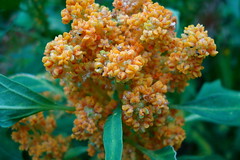
The picture on the left is amaranth. It can be cooked as a cereal, ground into flour, sprouted, popped like popcorn, or toasted. The seeds can be cooked with other whole grains, added to stir-fry, soups and stews as a nutrient rich thickening agent. The leaves of amaranth have a taste similar to that of spinach and can be boiled or stir-fried. 


Because amaranth plants withstand harsh conditions and sprout easily, they have spread around the world. In both Mexico and Peru the amaranth leaves are still gathered to use as a vegetable. 


In India amaranth is known as the King's grain, rajeera, and is popped then used in confections called laddoos. These are similar to a Mexican confection called alegria. In Nepal, amaranth seeds are eaten in a gruel called sattoo or ground into flour to make chappatis. In Ecuador, the flowers are boiled then the colored boiling water is added to rum to create a drink that purifies the blood.

Sunday, August 29, 2010

Ancient Grains: Corn


My interest in the Indians of Texas also led me to learn about the Caddo who were farmers. This made me curious about blue corn meal, the kind of corn meal preferred by most Indian Nations.

As I browsed the grocery store for blue corn meal, I found flours made from both amaranth and spelt. All of these grains have been used by people for thousands of years. I brought home all three kinds for experimentation. I will describe the history and provide recipes that take advantage of the unique tastes of these three grains that have contributed so much to human history.


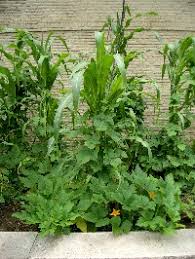
The Caddo, like most Indians who farmed, considered corn, beans, and squash to be inseparable. They called them the "three sisters" and always planted them together in a beneficial arrangement. The corn was planted first and provided a firm stalk on which the beans could climb.  The beans made the soil more fertile. Now we know that that beans make soil fertile because they have root nodules within which bacteria grow that can change air nitrogen into a usable form for plants. The  squash provides "mulch" with its roots and low foliage, preventing weeds from growing and keeping precious water from evaporating. The "three sisters"  garden in the image shows the squash and corn clearly. The beans are there too, they are just obscured by the corn and squash. 


Corn probably first originated about 7000 years ago. Controversy exists about the exact origin, but some scientists believe it originated as teosinte, a grass quite different from corn. Other scientists believe that it originated from a relative of teosinte, but I will leave those details to the scientists! Archaeological evidence from Mexico shows that around 5000 years ago, people in Oaxaca were domesticating something that was intermediate between teosinte and modern corn.

John Doebley and his associates at the University of Wisconsin investigate the genetic origins of corn and the relationship between corn and teosinte. You might want to find more details about their work on their website at http://teosinte.wisc.edu. The picture below, taken by by John Doebley is from that site.


Another interesting site is http://farma.qfb.umich.mx/etnomaii.htm. 
At this site, scientists from Universidad Michoacana describe how leaching of heavy metals into the water around Mexican volcanoes could have caused teosinte mutations. This in turn could have been a factor in the transformation from teosinte to corn.  


There are four major lineages of corn, and by the time Columbus found the New World, Indians were already growing all four types. Some of the oldest corn is actually popcorn!


Corn was an all purpose crop during its early domestication. People ate the corn, fed it to their domesticated animals, and ground it to save for later needs. They also used the cobs and husks to make mats and household tools.

The Maya had some of the earliest myths about the origin of maize, the crop that was so important to their existence. 

By going to http://www.mythinglinks.org/ip~maize.html you can see detailed information about corn myths. I will briefly summarize the Mayan and Hopi corn myths here. Also, I found information about corn and Mayan agriculture that you might be interested in at http://www.authenticmaya.com/maya_agriculture.htm.