Showing posts with label grain. Show all posts

Friday, November 5, 2010

Kamut: "Soul of the Earth"

I mentioned in my last post that I visited the bakery at Whole Foods during lunch today and bought some sweet potato bread. I saw another loaf that is called ancient grain loaf and because of my interest in ancient grains I had to buy one.

It is a lovely, solid little loaf that reminds me of rolly-polly bugs all rolled into a ball. The ingredients include a medley of ancient grains including:
kamut
spelt
quinoa and
amaranth.


It is a hearty, rich bread with walnuts in it.


I have written about all of the ingredients in this bread except kamut. Kamut® is a registered trademark of Kamut International, Ltd., used in marketing this grain.

Some interesting facts about Kamut include

  1. It is an ancient relative of modern durum wheat. 
  2. It two to three times the size of common wheat with 20–40% more protein, and higher in lipids, amino acids, vitamins and minerals. 
  3. It can be readily substituted for common wheat to make recipes more nutritious. 
  4. It has a rich, buttery flavor, and is easily digested. 

The Story of Kamut
After World War II a US airman claimed to find a handful of grain in a stone box within a tomb near Dashare, Egypt. Thirty-six kernels of the grain were given to a friend who mailed them to his father, a Montana wheat farmer.

The farmer planted and harvested a small crop and displayed the grain as a novelty at the local fair. The grain kernels were very large and he called it "King Tut's Wheat." But soon the novelty wore off and this ancient grain was all but forgotten.

T. Mack Quinn and his son Bob obtained the one remaining jar of "King Tut's Wheat" in 1977. They were involved in agriculture and plant biology and soon noticed the uniqueness and possible value of the grain.  They spent the next decade propagating the large, humped-backed kernels.

The Quinns found from their research that wheats of this type originated in the region between Egypt and the Tigris-Euphrates valley. They had "Kamut" trademarked as the name of the wheat because it is the ancient Egyptian name for wheat. Egyptologists claim the root meaning of Kamut is "Soul of the Earth."

For more information about Kamut, visit http://www.hort.purdue.edu/newcrop/proceedings1999/v4-182.html.

Saturday, September 18, 2010

Ancient Grains: Teff


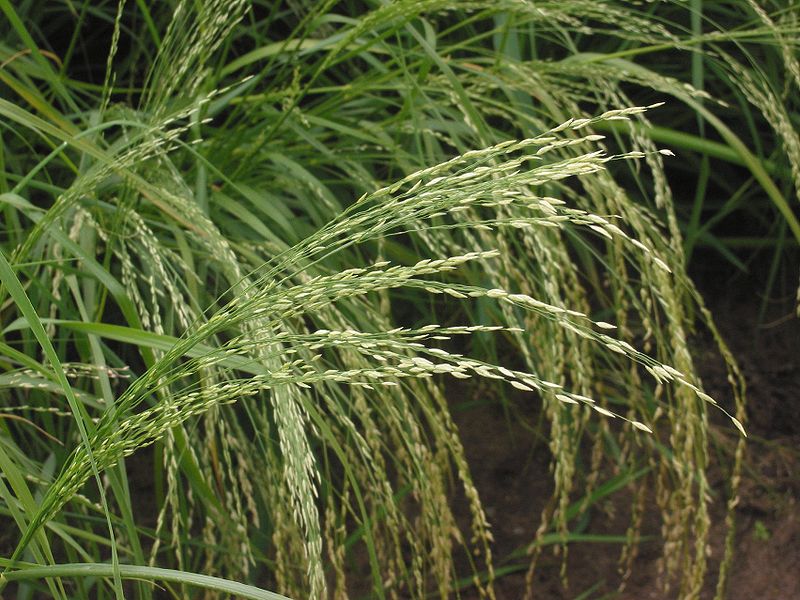
Ethiopians domesticated the grain Teff as early as 4000–1000 BCE. The name Teff means "lost" because this grain is easily lost if dropped because it is the smallest of the  grains.


Although many ancient grains have been nearly lost and rediscovered, teff has been used continuously in Ethiopa to make a bread called injera. This bread is a little thicker than a crepe and is quite spongy. Ethiopians prepare it into large flat sheets, then make "stew like" meals that they place on top of the injera. They then break off pieces of the bread and scoop up the stew with it to eat. I find this incredibly resourceful!


Teff is also known as lovegrass in English and belongs to the genus Eragrostus. Because the grains are so small the bran is difficult to remove, so it is used as a whole grain, making it quite healthy.


Teff is a crop that can survive the stresses of an unreliable climate, so it has the potential to provide nourishment in many marginal environmental areas.


Below are some interesting links that will help you learn more about teff.


http://www.versagrain.com/teff.html
http://www.hort.purdue.edu/newcrop/cropfactsheets/teff.html 
http://ethnomed.org/clinical/nutrition/more-about-ethiopian-food-teff
http://nutritiondata.self.com/facts/cereal-grains-and-pasta/10357/2


http://blip.tv/file/1501065 great video about making teff

Wednesday, September 8, 2010

Ancient Grains: Spelt


Eising/Getty Images

Triticum spelta, commonly known as spelt in the United States, Farro in Italy, and Dinkle in Germany is a type of wheat that was domesticated around 5-6000 BCE in what is now Iran. It spread westward throughout Europe and was  distributed to needy Roman citizens throughout the Roman Empire. Prior to 1920, it was the primary wheat source throughout the world. After 1920 it nearly disappeared from stores as wheat varieties too over because they have higher yields and easier processing. The health food movement brought it back to popularity in the 1970s.


Spelt contains about three times as much protein and fiber as white wheat flour. It also contains Mucopolysaccharides that act as a blood clotting factor and immune system stimulator. Spelt is also an excellent source of B complex vitamins. 

Because spelt has a sturdy husk on the kernel, it is resistant to some pollutants and insects. 

Sunday, September 5, 2010

Quinoa with Almonds and Cranberries


I love this recipe! Quinoa can be bland, but mix it with almonds and cranberries, and it is fabulous. The recipe is relatively quick and easy.


The ingredients are:
1 cup quinoa
1/2 cup slivered almonds
1 teaspoon of vegetable oil (I used almond oil)
1 1/2 cups boiling water
1 vegetable cube (or chicken boullion)
1/2 teaspoon salt
1 cinnamon stick
1 bay leaf
1/2 cup dried cranberries


Most quinoa sold in the United States have been pre-washed, but it is advisable to wash it again anyway. Soak the quinoa for 15 minutes. Afterwards, stir and drain the quinoa. 

Heat a wide-bottomed pan on medium heat and add the oil. Add the almonds and stir them until they are golden. Remove and set them aside. 


Next add the quinoa to the pan and stir until dry and turning color. Add the boiling water, cube or boullion, salt, bay leaf, cinnamon stick, and dried cranberries. Bring it to a boil then cover, lower heat and simmer for about 10 minutes, or until all water is absorbed. Let it sit for about 5 minutes. You can serve it immediately or save for later.

Ancient Grains: Quinoa

photo courtesy of net_efekt
Quinoa, like amaranth is not technically a grain because it is not a grass. Quinoa seeds however are ground and uses as grains. Amaranth is grown in warm areas or seasons, whereas quinoa is grown in cold areas or seasons. 

The origin of quinoa is probably the Altiplano region of Peru or Bolivia about 3000 years BCE. The ancient Incas called it la chisiya mama which means the mother grain. The first sowing of the season was a ceremony in which the Inca Emperor planted the first seeds with a gold shovel. The Incas mixed quinoa with animal fat and made balls that they called "war balls." The men would take them on marches as nutritious food. This seems reminiscent of the use of pemmican by the Commanches.

The Spanish conquerors did not like quinoa, possibly because the seed coat contains saponins, which are bitter. Saponins are easily removed by rinsing the grains, but the bitterness mixed with quinoa's sacredness to the Incas caused the Spanish to discourage its production. Instead, they encouraged corn production and quinoa became much less common. 

Quinoa color varies from off-white to red to black and it contains all nine essential amino acids. Also, quinoa is a good source of manganese, magnesium, iron, copper, and phosphorus, and a moderate source of zinc, potassium, B vitamins, and vitamin E. Quinoa is easy to digest and a good source of fiber. 

People often snack and overeat because when they eat certain foods their blood sugar level abruptly spikes and declines making them hungry again quickly. Quinoa has a low glycemic index therefore the uptake of sugars is regulated and slower, therefore the eater has a ‘full’ feeling longer. So quinoa can help you avoid between-meal-snacks. Also, quinoa is healthy for our hearts and has only about 159 calories per serving.
  

Friday, September 3, 2010

Amaranth Carrot Cookies: Energy for a Marathon


So with my grain of the Aztec Gods I had to make something special. I love cookies so I tried the recipe on the package of amaranth flour. 


I used the following ingredients:
6 tablespoons vegetable oil
1/2 cup agave syrup
6 tablespoons water
2 cups amaranth flour
2/3 cup corn or arrowroot starch
1 teaspoon baking soda
1/2 teaspoon sea salt
1 teaspoon cinnamon
2 teaspoons vanilla
2/3 cup grated carrots
2/3 cup raisins


I preheated the oven to 350 and lightly greased a cookie sheet. I then combined all of the wet ingredients and set them aside. In another bowl I mixed the dry ingredients. The recipe calls for sifting, but I didn't do that. It would probably make the cookies better, but I thought they were good without sifting.  I then added the wet and dry ingredients and mixed them well. Then I added the carrots and raisins. This recipe makes about 1 dozen cookies, so I divided the dough into 12 balls. I flattened the balls and placed them on the cookie sheet. I baked the cookies for about 12 to 15 minutes. They should be lightly brown when finished. I cooled them on a wire rack when they were done.


The cookies are quite filling and provide the body with a lot of energy. They have a touch of sweetness from the agave syrup and make a great healthy snack. And of course they have the grain of the Gods!

Ancient Grains:Amaranth

Amaranth, relative to the familiar garden flower cockscomb, cultivated in Mexico for about 4000 years, was considered sacred to the Aztecs. They mixed it with honey or sacrificial blood to form a paste that was molded into statues of Gods. The statues were used in ceremonies then divided and eaten by the people. 


Amaranth is technically not a grain like wheat, corn, and barley which are in the grass family.  It is a broad-leafed plant, and the seeds are used like grains.

Because the Aztecs revered amaranth and the Spanish conquerors considered these rituals barbaric, amaranth was forbidden and slowly disappeared into obscurity. Before the Spanish had arrived, amaranth had spread to the Inca Empire. People in remote mountain villages in Mexico and the Andes continued to grow amaranth.

Also, amaranth is quite hardy and grows wild in Mexico. It was rediscovered by the health food movement and became popular in health food stores in the 1970s. 

Amaranth is stuffed full of nutrition! It is gluten free and low in fat and high in fiber, protein, calcium, iron, magnesium, manganese, vitamin E, vitamin B6, riboflavin, niacin, pantothenic acid, folate, potassium, zinc, copper, selenium and phosphorus.  It has a low glycemic load, which means that it does not raise blood sugar significantly, making it a good food for people living with diabetes. The cholesterol lowering characteristics of amaranth also make it healthy. 

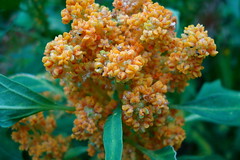
The picture on the left is amaranth. It can be cooked as a cereal, ground into flour, sprouted, popped like popcorn, or toasted. The seeds can be cooked with other whole grains, added to stir-fry, soups and stews as a nutrient rich thickening agent. The leaves of amaranth have a taste similar to that of spinach and can be boiled or stir-fried. 


Because amaranth plants withstand harsh conditions and sprout easily, they have spread around the world. In both Mexico and Peru the amaranth leaves are still gathered to use as a vegetable. 


In India amaranth is known as the King's grain, rajeera, and is popped then used in confections called laddoos. These are similar to a Mexican confection called alegria. In Nepal, amaranth seeds are eaten in a gruel called sattoo or ground into flour to make chappatis. In Ecuador, the flowers are boiled then the colored boiling water is added to rum to create a drink that purifies the blood.

Blue Cornbread

In honor of the Hopi People and the Blue Corn Maiden, I made cornbread from blue corn flour. You can see a piece of it above. It tasted great and was quite quick and easy.
hopi_corn_sm.jpg (19603 bytes)
                        Hopi cornfield at the village of Moencopi - 1941. 
              Photo NAU.PH.96.4.14.10 by Bill Belknap 
                                                    courtesy of Cline Library Special Collections, Northern Arizona University.


The Hopi  are sometimes considered the world’s greatest dry-farmers. They live in the high desert region of Arizona and have developed farming practices that allow them to grow corn by carefully using water. 

The Hopi consider themselves to be in their fourth way of life. As they moved from the third to the fourth way of life, Ma'saw offered them corn. The other peoples took the largest ears of corn and the Hopi were left with the short blue ear. 

Different Hopi clans have different versions of how this happened, but because they ended up with the short blue ear, the Hopi knew that their fourth way of life would be difficult and centered around corn. In this way, the Hopi believe that they have always had corn and agriculture. 

The recipe I used to make blue cornbread was incredibly easy! The image above on the left shows the blue corn flour I used. 

For this recipe, you will need
1 cup blue cornmeal 
1/2 cup all-purpose flour or any flour 
1 1/2 teaspoon baking powder 
1/4 teaspoon salt (optional) 
1 tablespoon honey 
1 egg beaten 
1 cup milk

I mixed the liquid ingredients in one bowl and the dry ingredients in another bowl. I actually used agave syrup instead of honey, and it substituted well. I then mixed all of the ingredients together and poured the batter in an 8 inch square pan. You can use a muffin pan for 6 large muffins instead  of using the square pan.  I baked it at 425 degrees for 15-20 minutes, until it was golden brown. It is best served warm.


Sunday, August 29, 2010

Ancient Grains: Corn


My interest in the Indians of Texas also led me to learn about the Caddo who were farmers. This made me curious about blue corn meal, the kind of corn meal preferred by most Indian Nations.

As I browsed the grocery store for blue corn meal, I found flours made from both amaranth and spelt. All of these grains have been used by people for thousands of years. I brought home all three kinds for experimentation. I will describe the history and provide recipes that take advantage of the unique tastes of these three grains that have contributed so much to human history.


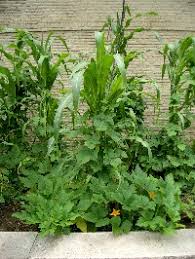
The Caddo, like most Indians who farmed, considered corn, beans, and squash to be inseparable. They called them the "three sisters" and always planted them together in a beneficial arrangement. The corn was planted first and provided a firm stalk on which the beans could climb.  The beans made the soil more fertile. Now we know that that beans make soil fertile because they have root nodules within which bacteria grow that can change air nitrogen into a usable form for plants. The  squash provides "mulch" with its roots and low foliage, preventing weeds from growing and keeping precious water from evaporating. The "three sisters"  garden in the image shows the squash and corn clearly. The beans are there too, they are just obscured by the corn and squash. 


Corn probably first originated about 7000 years ago. Controversy exists about the exact origin, but some scientists believe it originated as teosinte, a grass quite different from corn. Other scientists believe that it originated from a relative of teosinte, but I will leave those details to the scientists! Archaeological evidence from Mexico shows that around 5000 years ago, people in Oaxaca were domesticating something that was intermediate between teosinte and modern corn.

John Doebley and his associates at the University of Wisconsin investigate the genetic origins of corn and the relationship between corn and teosinte. You might want to find more details about their work on their website at http://teosinte.wisc.edu. The picture below, taken by by John Doebley is from that site.


Another interesting site is http://farma.qfb.umich.mx/etnomaii.htm. 
At this site, scientists from Universidad Michoacana describe how leaching of heavy metals into the water around Mexican volcanoes could have caused teosinte mutations. This in turn could have been a factor in the transformation from teosinte to corn.  


There are four major lineages of corn, and by the time Columbus found the New World, Indians were already growing all four types. Some of the oldest corn is actually popcorn!


Corn was an all purpose crop during its early domestication. People ate the corn, fed it to their domesticated animals, and ground it to save for later needs. They also used the cobs and husks to make mats and household tools.

The Maya had some of the earliest myths about the origin of maize, the crop that was so important to their existence. 

By going to http://www.mythinglinks.org/ip~maize.html you can see detailed information about corn myths. I will briefly summarize the Mayan and Hopi corn myths here. Also, I found information about corn and Mayan agriculture that you might be interested in at http://www.authenticmaya.com/maya_agriculture.htm.